Tuesday, April 1, 2014

The Pursuit of Happiness


(photo taken from jpsteiner.blogspot.com, via a Google image search for "pogs")

I was reading a blog post by a great writer the other day, and he was talking about how many great people in history have battled depression in various stages of their lives. Certainly, each of us can succumb to feelings of discouragement, boredom, or lose our passion for the activity that once enlivened our spirits. How can we fight these feelings that make us lose hope and deter us from taking action and accomplishing great things? I've found three methods that have helped me when these negative feelings begin to set in, methods that kindle the fire of productivity and inspiration once again.

1. Be grateful for what you have. No matter what you're going through, someone has always had it worse. Victims of war, religious leaders, victims of human trafficking, and countless others have faced plights that most of us can't even imagine. If you're driving down the street, be grateful for the car that you're able to drive. If you can't afford a car and are taking the bus, be grateful for public transportation that makes your commute faster. If no public transportation is available, be grateful for the ability you have to walk. If you don't have the ability to walk (this is where I can no longer say, "be grateful," for I can't imagine how difficult it must be) one may still find gratitude in the ability to be outdoors or in nature. One of my heroes is the son of the local Steinway dealer in Salt Lake City who was in a terrible boating accident. Someone's towel blew off the houseboat they were sleeping on, and in an effort to save them from having to jump in the water to get it, he dove in after it. Being on the diving team at his school, he didn't think anything of it. Little did he know that there was a small sandbar below, and the dive crippled him. He has since been in a wheelchair. However, he has found gratitude for the small and simple things in life, and has turned his misfortune into inspiring countless others on the subject of finding hope in their lives. I believe that there's no quicker road to happiness than by doing a quick inventory of all of the things you're grateful for. Opening our eyes to see all that we are blessed with is humbling.

2. Find a hobby. My family always says, "Oh no...Josh has found his new obsession. This is the next round of Pogs." Do you remember those truly ridiculous pieces of cardboard called "Pogs"? In first grade, I happened to be pretty good at taking that silver "slammer" and flipping all of the pogs right side up in the endless tournaments we'd play at recess, thus stealing a lot of pogs from my classmates and amassing quite the collection. Pogs were a fad about as fleeting as Beanie Babies (which, weren't those all supposed to be worth hundreds of dollars each by now? It'd be tough to find someone to even give them away to). However ridiculous they may be, hobbies can keep the human spirit alive and provide a meaningful and healthy escape from the routine of every day life. If you can find hobbies that benefit you or your family in a meaningful way, even better! About a year ago, my wife and I got really into emergency preparedness, a "hobby" that I would urge everyone to take up at some point. Having a bit of food and water on hand in case of an emergency, some camping gear, a flashlight, extra blankets, or whatever else you might need in an emergency gives you even more peace of mind in your day-to-day life. Since then, I've cycled through a few other hobbies, some too ridiculous to mention here. Golf has been a constant hobby since I was 15 years old. For Christmas one year, I received a piece of turf and a golf net that we set up in the garage. My mom would often find a club carelessly abandoned on the piece of turf when she pulled in, where only seconds before the garage had started to open I had been hitting my 172nd shot into the net on one of my (far too frequent) practice breaks. My sprinting from the piece of turf to the piano became an art form in and of itself.

3. Maintain balance. If you try to take on too much, no matter how much you enjoy an activity, it can start to lose its zest and you can come to resent it. One of the common balancing acts I have to execute is a proper balance between performing, teaching, practicing, family time, and hobbies. If I have constant performances, I often miss teaching. If I am constantly teaching, I miss performing and may not be practicing as much as I need. If I do anything with piano to an excess, I neglect my relationships with those I care about most. I've noticed another toxicity in regards to balance - being too intense in one's endeavors can lead to an abandonment of those very endeavors. I was recently very sad when one of my favorite students quit taking piano lessons. He was probably in his late fifties or early sixties, and he practiced about 6 hours per day. I always looked forward to our lessons, but a few months back he took a dangerous turn. He wanted to play all of the most difficult Chopin Etudes. After handling Op.10 No.1 really well, he proceeded to go to the dreadful Op.10 No.2 (chromatic) and Op.25 No.6 (double thirds) etudes, pieces which I'm personally intimidated by and seldom perform. He thought it would be a healthy challenge. In hindsight, I should have insisted that he stop. When I originally suggested it would be too much, he asked to move forward anyway, and that we would treat them like exercises. I agreed, as long as we could keep working on more accessible repertoire. He worked extremely hard, had a great attitude about the pieces, and was making headway at a much faster pace than I had expected, when all of the sudden I received an email from him saying he was going to stop taking lessons, that it was simply too much for him, and that he wasn't seeing the results he wanted. I wrote him an email back, telling him how well he had been doing and to notice what tremendous strides he'd made in the past year, already tackling several difficult pieces, and taking on some of the most formidable etudes to improve his technique (and doing really well with them!). It taught me a great lesson that even with rock solid determination and white hot persistence, we can all break at some point, and it's smart to do a weekly self check-up, take a step back, and look at the bigger picture. When readjustments need to be made, don't be afraid to make them. Accompanying really stresses me out a lot of times. Learning vast amounts of repertoire under a very tight deadline when I already have a huge practicing/performing/teaching schedule added quite a bit of anxiety, and I finally asked myself, "Why am I doing this?!" It's quite rare that I'll take an accompanying gig now. Occasionally I'll do it if a piece really intrigues me, or if it's for a close friend or a family member, but simplifying my life in that one small way is something that has really improved my overall attitude and kept my stress levels in check. Even if it's difficult to say no to some things, it can often be worth it if it simplifies your life and allows you to focus on things you're even more passionate about.

A great church leader who I respect greatly put it best when he discussed these topics in a talk entitled "Good, Better, and Best." Which one will you choose? What are the top priorities in your life, and are you letting good things stop you from accomplishing the best things?

Wednesday, February 12, 2014

Letting Go


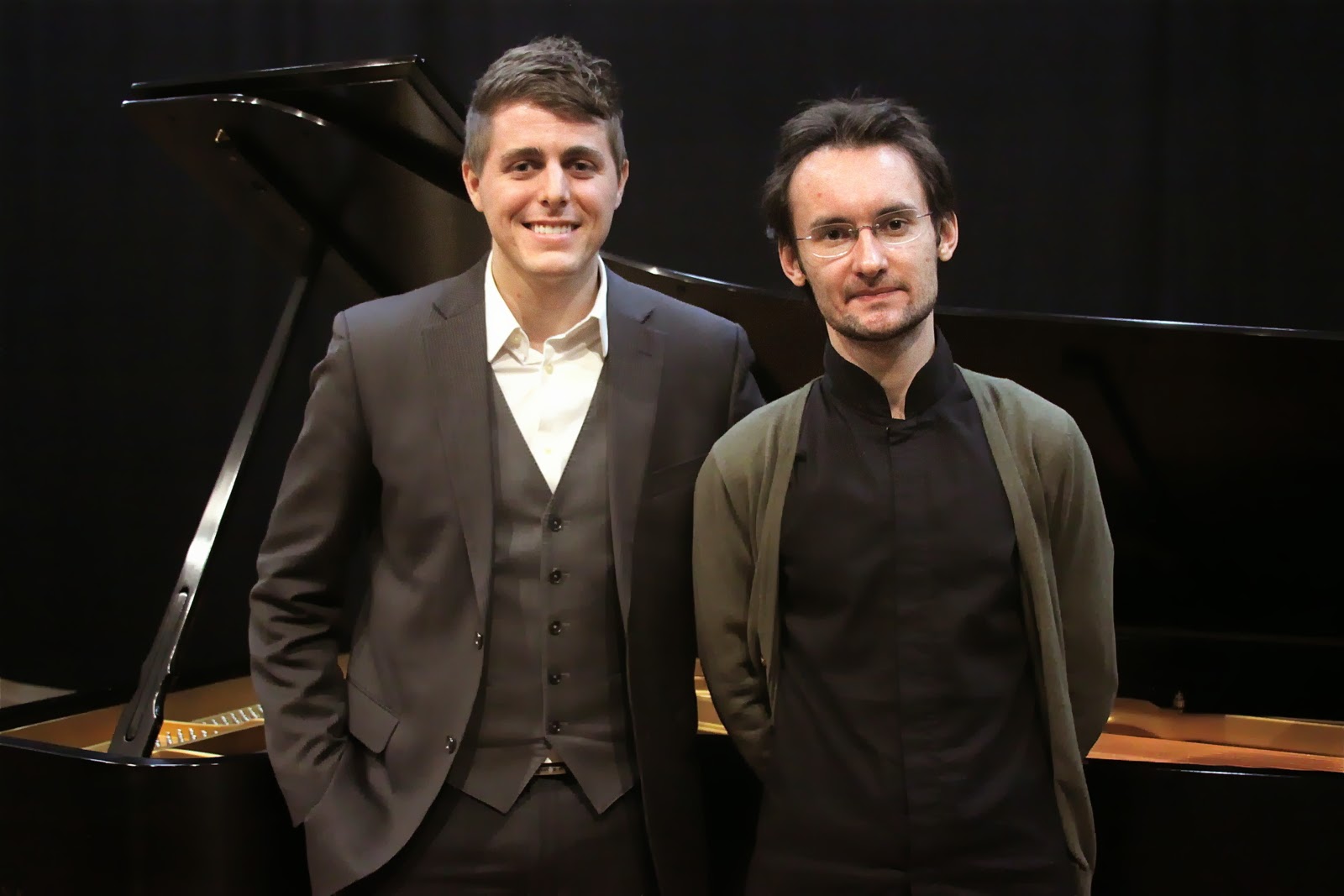
A few months ago I had the opportunity to compete at the Heida Hermanns International Piano Competition in Westport, Connecticut. After years of competing, I've learned that the healthiest way to go into a competition (mentally) is to have absolutely no expectations of winning. Thus, it was very rewarding and surprising when they announced that I had tied for first prize with Timur Mustakimov, the first tie for gold in the competition's 42-year history. Far more rewarding than winning was the experience I had previous to the competition. What I learned has helped me tremendously in my concerts over the last few months since competing there.

I have always been a fan of The Power of Now by Eckhart Tolle. I remember being extremely calm when competing in the International Chopin Competition Preliminaries (probably the biggest piano event of my life!) in Warsaw a few years ago. I was extremely nervous for the competition, as it had always been my dream to compete there. Even though I only made it to the preliminaries and didn't advance into the first round of the competition later that year, it was still an amazing opportunity to see Chopin's birthplace and visit the country where he grew up. Having just finished Tolle's book for the first time, I remember having a very keen awareness of the present moment, and I was able to fight off nerves better than I ever had before. Remembering this experience, I thought it might be useful to go back and re-read the book before the Heida Hermanns competition. I actually ended up listening to the entire book with my wife, Lindsey, on the 12-hour drive from Michigan to Connecticut. Lindsey had also been listening to some meditation tracks online that had been helping her with stress levels as she was finishing a bunch of doctoral coursework and her dissertation. She suggested that I give it a try as well.

The day before the competition we listened to a few of the meditation files, and I listened again to a couple of my favorite chapters of the book. I practiced for maybe an hour, mostly going through all of my pieces very slowly, and performing them once. When I showed up to the competition I was in a mental state of utter calmness. I had prayed to have peace, and I could feel not only peace, but a sense of being alive that I'd rarely felt before. It was as if I could feel every moment as it happened, and I was aware of all movements I made. It sounds weird, but it was very invigorating and mentally stimulating. As I walked onto the stage, it felt as though I was more aware of my breathing, sitting down on the bench, the scent of the piano (Steinways have a very specific scent that I can remember experiencing when I was 10 years old for the first time), lifting my hands to the keyboard, and then...just letting go. It was a very unique experience. It was as if there was a wall between my thinking and my playing. I was more of an audience member than a performer. I just listened to the sounds I was producing, rather than analyzing each line in my mind before I played it. It was complete freedom, and I was absolutely unaware of the time. I was enjoying myself, but it wasn't because I was performing. It was because I had total acceptance of what was happening. It didn't matter any longer how I played, but rather that I was sharing what I loved with the audience, and more importantly, enjoying what I loved doing. I finished playing, and it suddenly dawned on me how well I had performed. I wasn't in the state of dissecting every detail like I do in the practice room, but rather, I had completely let go.

This lesson in unconditional self-acceptance has been an extremely valuable lesson in my life. Whenever I approach the stage now, it is with love towards myself and the audience, rather than criticism of myself and hope that the audience will like what I do. Ultimately we have no control over what others think about us. We only have control over our own self-acceptance. To quote the meditation we listened to immediately before walking on stage, "I believe, I trust, I let go."


Tuesday, November 12, 2013

Find Your Niche...Build Your Brand


How many of you have seen the show "Shark Tank"? It's a show about hopeful entrepreneurs who stand before a team of "sharks" (incredibly wealthy and successful businessmen) and pitch their business ideas, asking the sharks for backing for a stake in their company. Some of the businesses are incredible, and others are hilariously bad. One of the sharks, Daymond John, is the president and CEO of FUBU, a very successful clothing line that has caused him to be recognized as one of the country's greatest entrepreneurs. I'm reading his book right now, "The Brand Within," and I came across a particular passage that struck me as very significant. I believe it is highly beneficial to any entrepreneur trying to "make it" with whatever he or she is selling, whether it is goods or services, and that a basic understanding of these principles can provide clarity and direction for where you want to take your business. Let's dive in and take a look at the four steps he outlines.

1. The Item
No matter what type of entrepreneur you are, you will always have an item. As a musician, my item is a piano lesson, a piano concert, a CD, a DVD, an accompanying gig...you name it. Some of the things I'm selling are physical items, like the CDs, but most of all, I'm selling my time and knowledge. My dad is a stonemason. He's ultimately selling a beautiful rock wall, fireplace, stone on a home, mailbox, or other product associated with masonry. However, he's ultimately selling his time and expertise, and some physical stuff comes with it. I believe that in our society today, as technology advances, information has become the greatest item of all. I recently bought a Kindle from Amazon, one of those nifty little e-readers (as I feel like I'm going blind from reading all of my books on my phone....between the microscopic text and the blaring backlight, everything I look at is gradually getting fuzzier), and as I've entered this whole new "Kindle World," I'm amazed at just how in-demand information is in the form of books. Even specialized and rare books are now available in a "Kindle Edition." Amazon reports that there are over a million books available in their store. I know that pales in comparison to how many books there are in the world, but this e-reader craze that's hit the market has already developed into a bursting-at-the-seams boatload of content that a single human could never hope to consume in a lifetime.

2. The Label
When you buy a basic item - such as a backpack, pair of jeans, laptop case, you name it - and you just want the plain old item, you're not too concerned with the brand you're buying. For instance, I have a laptop case I bought from someone on eBay. I think it was six bucks. The label is marked "skque". Why did I call it a label and not a brand? Maybe I am incorrect to do this, but to me it's a label because it means nothing to me. However, when I set my laptop down on the piano today in University of Michigan practice room 1161, what brand of piano did I set it on? Probably my favorite brand in the world - Steinway and Sons. We'll talk about that shortly. Suffice it to say, a label is simply a name for something, whereas a brand is so much more. (On an extremely nerdy sidenote (yes, this is for you, Mom) - when I was about 9 years old, I got one of those extremely incredible label makers. A girl - yes, a girl - at school had one, and I instantly became jealous, but my blue one was much more manly than her pink one. Oh wait, the store was out of blue, so I had to get purple. I set out labeling things around the house. My mom approached me and told me that I had kind of missed whole point of a label maker. "What do you mean?" "Well," she said, holding up the can opener, "you labeled this CAN OPENER. Did you think we were going to get confused at what it was? When you label stuff, label it with your name.") On this note, when we are selling our time, our name is our label. If I was taking a piano lesson with Vladimir Horowitz, the item would still be a piano lesson, but the label would be a "Vladimir Horowitz" piano lesson. Furthermore, since Horowitz is such a genius, it would extend into the brand category.

3. The Brand
According to Daymond John, when you purchase a particular brand of something, you're making a promise. You're declaring your loyalty to that brand. I have a friend from my mission who makes it a point to not wear particular brands. "Why would I want to advertise for these companies I hate? Even if Abercrombie or American Eagle or H&M has a great T-shirt, if it has their name on it, I don't want it, because they are the epitome of everything I can't stand about consumerism and materialism." What's so special about that three-pronged symbol, wrapped up so elegantly (cough) in a circle? Oh yeah, it's a Mercedes. What's the difference between my used and scratched Honda Civic and the same year's model of a Mercedes? In the world's eyes, everything. In my eyes, very little. What I see when I see both cars is that they'll both probably last around the same amount of years if I'm diligent with the upkeep. However, when I think of owning a Mercedes, I get kind of a sick feeling, not just because of the huge payments, but because if I had to replace parts on that thing, it's probably going to cost me a lot more than a Honda. On the flip side, a lot of people view Honda that way - they buy Fords or GMCs because the parts are cheaper. Every day I drive my car, I'm saying, "Hey world...I drive a Honda." And, unless I put a bumper sticker that says, "I HATE Honda even though I'm driving one," I'm telling the world, "Hey, Hondas are great cars. I drive one, and so should you." Brands develop loyalty in a variety of ways. For me, Steinway and Sons, my favorite brand in the world, has consistently earned my loyalty over the years as the best brand of piano. Why? Because it has consistently produced the most responsive, dynamic, colorful, and warm musical instruments I've played. Have there been some Yamahas that have been better than some Steinways I've played? Certainly. You don't need to look beyond most University's practice rooms, filled with "Steinways", aka black boxes that have been pounded on for 16 hours a day by "musicians," effectively stamping out any brand on the piano (and in some cases, literally...they are so scratched you can't even see "Steinway" anymore). However, Steinway consistently delivers a product that is so superior than that of other brands, in my opinion, that it is no problem for me to declare them as my favorite brand.

4. The Lifestyle
Finally, we see lifestyles that come along with brands. My wife and I are cheapskates at heart, but that doesn't stop us from enjoying going into the most expensive stores and just browsing when we're out of town and have some time to kill. I've had several competitions and performances in New York over the years, and if there's one store that has stuck out in my mind that ties into this whole "lifestyle" thing, it's Tiffany. When you go into their store, it's extremely quiet and clean. Everything is beautifully encased, and when we've gone, it almost seems like there's a "crowd-control" factor. The way they've accomplished this is by having such a large staff that the store actually seems less crowded, since there is always a person available to help you. As you browse the overpriced selection, suddenly it doesn't seem so overpriced anymore. "Wow that's expensive...but hey, it's quality. After all, it's Tiffany!" These words have been uttered by countless women to justify absurd purchases. Is that priceless lock and key necklace for $200 that much better than the $5 one you can pick up on Canal St. in the back alley? It's ultimately just a necklace. "But wait! It's so much more than that!" Really? How? "Well, it says Tiffany on it." Go to an African village, and see if they can tell the difference. Whether we like it or not, brands bring about a lifestyle with it. When you see WalMart's Great Value items stocked in someone's pantry, as opposed to brands you'd buy at Whole Foods, it tells you a little something about that person. I like both stores for different reasons, and I'm not calling anyone bad who drives a Mercedes or Honda, who shops at WalMart or Whole Foods, who eats at McDonald's rather than Ruth's Chris...I'm just drawing awareness, thanks to Daymond John's book, as to how brands greatly affect our life, by creating the false illusion (and in some cases, a reality!) of the lifestyle that comes along with that brand. (On a side note, I believe that this country's staggering amount of debt is a direct result of abuse of these four steps - people trying to live lifestyles that they obviously can't afford and sustain).

As an entrepreneur, what is the item or idea that you are going to sell? Will you simply label it, or will you brand it? Is there a lifestyle associated with your product? If so, how will you turn your item into the ultimate item for that lifestyle? What will set your brand apart from others? Finally, what niche will you fill in your market that is missing today? Special thanks to Daymond John for writing such an amazing, inspiring and entertaining book that reads so easily, but has a wealth of invaluable ideas.


Wednesday, October 30, 2013

Paganini Etude No.6

I thought I'd share a fun new music video I just released of Franz Liszt's Paganini Etude No.6 with all of my amazing blog readers. Thank you so much for your support! I hope you enjoy it :)


Tuesday, October 29, 2013

Principles

I've been thinking a lot about the eternal nature of principles. In a "give-me-everything-for-free!" entitled society, I see more and more brats out there than ever before, as well as more and more incredible individuals that are making a huge difference in the lives of others and in their families. With more opposition in the world than ever before, the divide between the dead-beats and elite individuals is widening. One thing that we're constantly faced with is whether to partake of the principles of worldliness, materialism, and greed. So much of our world is dominated by the "getting ahead" mentality that we'll take any free handout, any shortcut to success, and we'll do anything for that one extra toy or gadget that we have to have.

I'm a nerd who really likes to read finance books. I think it stems back to my childhood and the decision I made when I was ten-years-old that I wanted to be a concert pianist. I made the decision after seeing one of my peers - Ryan Brown of the Five Browns - play with the Utah Symphony. After watching the inspiring performance of this kid - who was WAY old, by the way...I mean, he was twelve and I was only ten! - I knew I wanted to do this whole piano thing forever. In my maturity, I knew that my old dream of being an NBA player probably wouldn't pan out, and the fact that I had been recently been cut from the Gold soccer team to the Silver team was a sure sign that my soccer skills wouldn't work out either (they fizzled out by age 13, after which I took up the physically demanding "sport" of golf). Whenever I told people this, they said, "Good luck being a starving musician." Or, "What's your backup plan?" Or, "What do you want to do...teach?!" followed by a mocking chuckle. Little did they know that those insulting questions were the fuel of motivation. Sure, getting an MBA will almost always have a better financial outcome than an MM in Piano Performance, statistically. But who cared about the statistics? I was going to do everything possible to propel my passion. I dreaded doing anything else as a career, and I was going to do everything in my power to beat the system.

My brothers and I were taught hard work from a young age from our awesome parents. My dad is basically made of steel, and my mom is a 3x cancer survivor. If I didn't get my two-and-a-half hours of practice in per day, I had to make it all up the next day. I think I can count on one hand the number of days I ever had to do five hours of piano practice, because I hated those days so much that I'd gladly turn down offers to go out and play with friends to make sure I finished my practicing. My brothers and I had always gone to work with my dad on our breaks from school and during the summers. One day, when my Dad cut his thumb off in his cement mixer and I watched as they had to sew it back on, I knew there had to be something better out there for me, so I quit. He told me, "If you're not working for me, you're going to start your own business. I don't want you flipping burgers." So, I started teaching piano. Pretty soon, my $10 per half-hour lesson (over TWICE the rate he had paid me, and I got to sit in a nice air-conditioned room playing and teaching music!) business took off and I built up a studio of twenty-five students. I saved every dollar I could so I could pay for my college and hopefully "make it" as a musician one day. The principle of creativity was instilled in me as a result of this situation - a seed had been planted for future success. The socialist/communist/whatever-you-want-to-call-it view of "You didn't build your business...your customers did!" never made sense to me, and it still doesn't. Why couldn't I create something out of nothing, especially when the long, hot days doing stonemasonry was the only option I could go back to?

I've recently reviewed a book I read when I was in my teens called The Millionaire Next Door. To be honest, it's a pretty dry read, and I did a lot of skimming. It's basically a book full of statistics about the behaviors of millionaires. Sure, it makes a lot of them look like penny-pinching cheapskates, but there was one example that really stuck out to me. One of the millionaires in the book was worth over five million, and he lived in the same neighborhood he always had, drove a modest used vehicle, owned his own business in the industrial part of town, and was just a "common man." He was strategic with his wealth, however, and amassed a fortune, even without earning an insanely high income. People noticed the success of his business and would ask him for advice. He ended up saving many different businesses of friends and acquaintances over the years, and several of them wanted to buy him something really nice to thank him. They decided to go all-out and buy him a custom-made Rolls Royce. It wouldn't be ready for nine months, and four months into it he found out what they had planned. Gently, he went to them and told them he couldn't accept such a kind offer. How could he accepts such a gift? He enjoyed simple restaurants with simple folks - how could he pull up in a Rolls Royce to the local diner he'd been going to for years and feel good about it? How could he go to work in that car without his workers feeling like he was exploiting them? Most importantly, how could he take that down to the lake to go fishing? After all, you can't throw dead fish in the back seat of a Rolls like you could in his vehicle!

This man said something extremely simple, "Money should never change one's values." This principle - the principle of integrity - was reinforced to me the other day in a piano lesson. The teacher was talking of various types of students, and how they can be broken down into three categories:
1) Lots of talent, lots of integrity (to work hard and focus)
2) Not a lot of talent, but lots of integrity
3) Lots of talent, no integrity
He reiterated that while it's sad that some simply don't have a lot of natural ability, those who work hard far outdo those who have a lot of natural ability but are lazy.

Yet another lesson I recently learned was from my mom, who is taking a college class in psychology. They recently read a book that had a chapter on honesty and justification, and how all of us "cheat" a little bit. Would you rob a bank? No way! But will you point out the missed charge when the cashier forgets to ring up one of your expensive items? Or will you refill your soda even when it says "No refills"? Why would you do one and not the other? The book brought up an interesting point about how people's situations can make them sway in their conviction of their principles.

All of these things have been circulating in my mind, and as I've thought more about them, I  realize that principles greatly determine what and who we will become. While situations are constantly changing around us, principles are either upheld, or they are shattered. In the book Think and Grow Rich, an amazing book that talks of the richness of life and spirituality (and surprisingly very little about money), Napoleon Hill talks of the principles that govern the lives of some of the most successful individuals in America. These principles are Desire, Faith, Auto-Suggestion, Specialized Knowledge, Imagination, Organized Planning, Persistence, Creating a Master Mind Team, Harnessing the Power of the Subconcious, Utilizing Your Brain, and Outwitting Fear. These principles are eternal. They will exist whether you choose to utilize them, harness them, ignore them, or never bother to think about them. They are free - you don't have to buy these principles. You can choose to incorporate them at any time. You can choose to abandon them at any time. However, I pose to each of you the following questions, "What do you want out of life? What are you striving for? What drives you?" And finally, "What principles do you need to achieve the answers to the aforementioned questions?" Imagine a huge wall of principles looming before you, and you can hand-select whichever ones you want, good or evil. The power of choice lies with you, but with each principle you select, various consequences will follow. Which principles will you personally select, and what will they make you become?

Thursday, October 3, 2013

Comparison

This morning I was teaching a Skype piano lesson to a really great adult student in North Carolina. We've worked together for around six months. He's making great strides in his playing, and he is an incredibly hard worker, probably averaging around three hours of practice a day. I had a valuable lesson reiterated to me as I was working with him. He started out the lesson by saying, "You know, I've been working hard on my scales, and I can play them at mm.160 (4 notes per click) if I'm lucky, but I feel pretty confident at about mm152." If any of you play or teach piano, you know that this is no small feat. "Mm" is just an abbreviation I use for metronome marking, and each metronome marking indicates beats per minute. Personally, I feel like my scales are maxed out at around mm.184. I can play individual ones faster if needed in a piece, but I really have to work at them. Most students that I teach average anywhere between mm.60-120 for their scales. So, needless to say, he is quite advanced in this respect. He is playing also playing the Chopin Op.18 Waltz in E-flat Major at a really high level, along with Tchaikovsky's "October".

He recently brought the Chopin Etude Op.10 No.3 to one of his lessons. He decided to learn the middle part first, which is much more demanding technically than the first and last parts of the piece. We worked the middle section a lot together, and he improved greatly. However, the opening line of the piece, a slow singing line, seemed to be giving him a lot of trouble. I was a little stumped because he'd played the Tchaikovsky so well. Some students are stronger lyrical players, and some are stronger technically. I've never come across someone who'd played the middle section so well, and other lyrical pieces so well, but struggled with this particular passage. Similarly, I've had students tackle extremely difficult material, only to struggle with material that I've deemed "easy" in my mind.

An example from my own playing is the fact that I feel quite confident playing Scarbo from Maurice Ravel's Gaspard de la nuit. Now, I know I'm no master, but I've competed with it for several years with some success. It's considered by many to be one of the more difficult pieces in the piano repertoire. I also feel quite comfortable with the last movement of Samuel Barber's Sonata in E-flat Minor, Op.26, a daunting fugue that was originally premiered by Horowitz. However, if you give me Chopin Etude Op.10 No.2, my hand and mind immediately forget that I'm a pianist, fear clutches my whole being, and the piece turns into useless mush. I have such a death grip on the notes that my fingers could probably snap off, and I want to go kill myself when I hear the 10-year old Chinese girls playing it twice as fast as I can on YouTube.

The lesson to be taken from working with this great adult student is that comparison to others is ultimately an empty pursuit. I'm not implying that it's not important to strive to be as good as someone you admire, or that you cannot learn from a great master. What I'm getting at is that depression can quickly set in when we allow ourselves to be defined by others' achievements. It's the whole mentality of "If he or she has more, I have less." This is a shameful and destructive way to think, but we all fall into that trap if we're not careful. The opposite is true as well. If we've achieved a high level of anything, humility is key in order to keep achieving great things. It's so easy to get out of touch, become comfortable, and stagnate. Ultimately, comparison to others is completely meaningless, and almost always debilitating. Rather, setting ideals in your mind, even unprecedented ideals, and striving for these is how we become something, rather than simply achieve something or cross it off of a to-do list. Becoming should be our ultimate goal, for when you've become something, riches are gleaned through your mindset and skill-set that money or materials cannot purchase.

Tuesday, October 1, 2013

Talent


The man in this photo may very well be the most talented pianist on earth. Of course, this is just my opinion, but I've never met someone who has such jaw-dropping technique that still finds time to express every note with such finesse and sincerity. He has the warmest and most gorgeous tone quality I've ever heard, while still maintaining fiery passion. I've had the pleasure of working with Sergei Babayan in private lessons every few months for the last 4 years, and last week I saw him perform for the first time. What an incredible experience to watch him perform Rachmaninoff's Third Concerto.

All of my amazing teachers - Susan Duehlmeier, Sergei Babayan, and Logan Skelton - have instilled wonderful qualities in me as a musician and person. All have stressed the need to find beauty in every note I play. However, I still find myself falling short in many performances. I miss so many notes, or it's not expressed exactly the way I want it, or my memory lapses...so many things can go wrong. It's frustrated me to a great degree. However, I realize a great flaw that may have been causing this for all these years - distraction.

A few weeks ago, I had a life-changing lesson with my teacher here at the University of Michigan, Logan Skelton. He asked, "Do you have any interest in starting to do competitions again?" I told him that I did. I have been postponing applications for competitions while I've been learning new repertoire, but I feel like my skill is slipping, and competitions really keep me on top of my game. To give you a precursor, last year may have been the craziest two semesters of my life - I learned Tchaikovsky Concerto No.1, Schubert A minor sonata, relearned a bunch of classical selections for my new CD My Favorite Things, arranged the remaining selections on the CD, flew home during Christmas and Spring breaks to record the CD, then performed about 20 concerts over the summer, in addition to teaching about 20 private students on Skype every week...and hanging out with my really hot wife.

He was blatantly honest with me. I told him that even though I would like to do some big competitions, I wasn't sure I could place in any of them, but that I'd do them anyway, for the experience. He told me, "You know, Josh, I don't think you can really make that call. I have total confidence that you could reach a really, really high level of playing. You already play so many things extremely well, but I have confidence that you could play anything you want at any level, and be very successful in competitions. Of course, every competition is subjective, but if you do enough of them and are dedicated enough, I don't think there's a whole lot you couldn't do. Last year, I saw you barely hanging on...you are a busy guy. You recorded that album, you're in school with a full load of courses, and you teach a ton of students. You're successful, but I notice that you are giving last priority to your playing." The words were incredibly kind, but they stung like crazy, as they affirmed what I already knew I needed to fix. I had put the single most important thing in my career on the back-burner, placing the thing of most value in last place, letting other good things take a place ahead of them. Of course, none of the other things - teaching, recording, studying - were bad things, but those are the very things that are meant to shape the ultimate goal of becoming the greatest pianist I can become.

I walked out of that lesson with a renewed determination. My practicing has been significantly better and more focused since then, and any time I hear someone who is better than me, I think to myself, "They may be able to outplay me, but they'll never be able to outwork me. One day, I'll be that good." Now, I don't know if I'll ever be as good as Babayan, or my favorite young pianist Daniil Trifonov, but I do know that by holding them as the ideal, even if I fall short, I will have come significantly further than if I had simply just aimed for mediocrity.

Two weeks passed, and I went to another lesson. I now had a large plate of repertoire that I needed to devour, and it was intimidating me. I had learned the first movement of Rachmaninoff Concerto No.2 in a week - it wasn't even close to perfect. I'd also started bringing back some repertoire for a big international competition audition tape. And I had learned the Rachmaninoff Etude-Tableau Op.39 No.1 in tempo. But, I still had Beethoven Waldstein Sonata, Carl Vine Sonata, a Volodos transcription, and a Chopin Nocturne looming ahead. I don't think I've ever attempted this much repertoire at once. I asked him, "How in the world can I balance all of this stuff? Do I just need to man up and do it? How would you go about it?" He gave me some detailed and sound advice, closing off with a laugh, "Yeah...basically you just need to man up."

When I was sixteen, I was preparing for the National Chopin Competition. It was a Thursday, probably 6 months before the competition. My teacher, Susan Duehlmeier, passed me in the hall after a concert. She said, "You know, I was thinking, can you relearn the first movement of your Chopin Sonata in B Minor for your lesson on Tuesday?" I was a little freaked out, but thought, "Yeah, I can do that." I told her I'd do it. We talked for a bit, and she said, "Oh yeah, and have the whole thing memorized." Seventeen pages, relearned and memorized in 4 days?! I'm a slow memorizer. I responded, "Susan, I really don't feel like I can do that. That's a lot, and you know I'm a slow memorizer." She smiled and said, "You can do it. I wouldn't ask you if I knew you couldn't do it." Tuesday came, and I managed to get through the whole first movement memorized. I couldn't believe what I'd done...how did I do that?

What I've realized from these three incredible individuals is that noble thinking allows one to transcend any limitations one has previously established as their "talent level." So many times in the past, I've thought, "I'm not talented enough to play something like that, to learn it that quickly, or to perform it that perfectly." When I do this, I place limitations on my potential, and my thinking becomes far less than noble. Also, filling up my days with endless amounts of teaching, studying, or other activities that ultimately rob me of the most noble goal of all is a sure way to lose potential to an even greater degree. Everyone needs balance, and any one thing in excess can put a damper on your happiness. However, I think the greatest damper is not discerning the difference between good, better, and best. When we put the best things first, our talent can blossom, which enhances and enriches those things that are only "good" and "better". Ultimately, talent is just the sum total of noble thought coupled with the amount of work you have put forth. So long as your thoughts remain noble and your mind remains open, your talent is in a perfect environment to grow. Then, all it needs is work. How much your talent grows depends on how much work you put into it. It can grow to astronomical heights, as is evidenced in the playing of Babayan, a man who has dedicated his life to his art while still maintaining balance as a wonderful person, teacher, husband, and mentor. How large will you allow your talent to grow?